








When a customer approached Baobabmart wanting to learn how to grow cocoa beans in their backyard, we sought expert insight.
We spoke with Ekon, a dedicated organic cocoa farmer from Cameroon, who revealed his tried-and-true techniques.
This article breaks down Ekon’s tips, making it simple for you to start growing cocoa beans at home.
How to Grow Cocoa Beans
Why Grow Your Cocoa Beans?
- Growing your cocoa gives you the satisfaction of producing your chocolate ingredients.
- You master the growing process to obtain high-quality organic beans.
- It is a fun project for gardening enthusiasts and supporters of a sustainable lifestyle.
Understanding the basics of the cocoa tree
Cocoa trees (Theobroma cacao) are tropical evergreen trees that grow in hot, humid climates. They can grow up to 10 m tall but can be kept smaller in containers. Their main characteristics:
- Leaves: Red or light green to start, dark green to finish.
- Pods: Variable size (10-30 cm) and colour (green, yellow, red).
- Lifespan: It takes 4 to 6 years to produce fruit, with two harvests a year.
Step 1: Choosing the right cocoa variety
Popular types of cocoa bean
- Criollo – Rare, delicate flavour (ideal for fine chocolate).
- Forastero – Hardy, high-yielding (common for commercial chocolate).
- Trinitario – Hybrid, balanced flavour and disease resistance.
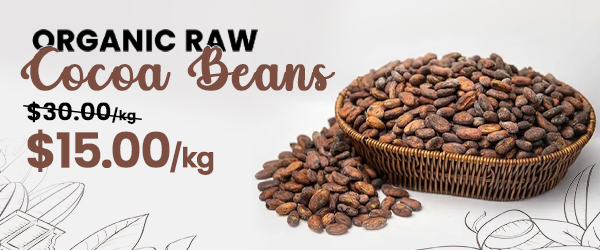
Where can I buy cocoa seeds or plants?
- Buy fresh cocoa pods (30 to 50 seeds indoors) or seedlings from exotic plant nurseries.
- Look for grafted trees for faster fruiting (3-4 years).
Step 2: Creating the perfect environment
Climate and temperature requirements
- Ideal: 21-32°C with 70-80% humidity.
- No frost or temperatures below 10°C (50°F) – greenhouses work well in cooler climates.
Soil and shade requirements
- Soil: Well-drained, rich in organic matter (pH 5.5-7.5).
- Shade: Young trees need 40-50% shade (use shade cloth or taller plants).
Step 3: Planting cocoa seeds or seedlings
How to prepare and plant the seeds
- Germinate the seeds in damp kitchen paper for 3 to 7 days.
- Plant one seed per pot in a mixture of compost and sand.
- Keep warm (75-85°F) and moist.
Transplanting seedlings successfully
- Put them in a larger pot (or in the ground in tropical climates).
- Ensure good drainage to prevent root rot.
Step 4: Caring for your cocoa trees
Watering and Humidity Tips
Cacao trees thrive in consistently moist soil, so water them daily—just enough to keep the soil damp but not waterlogged.
In dry climates, maintain high humidity by using a humidifier or regularly misting the leaves to mimic their native tropical environment.
Fertilizing for Healthy Growth
To support strong growth, fertilize your cacao tree every 4 to 6 weeks with organic compost or a balanced, slow-release fertilizer.
Be cautious not to over-fertilize, as excess nutrients can damage the delicate root system. A gentle, consistent feeding schedule will keep your tree healthy and productive.

Step 5: Pest and disease management
Common threats to cocoa trees
- Black Pod Disease: A type of water mold, Phytophthora, blackens and kills the cocoa pods that contain the beans. The damaging spores are carried by wind and water as well as insects, bats, and rodents, which cause the pods to rot.
- Witches’ Broom is a fungus that stunts the growth of the flowers and pods.
- Mirids are insects that feed on trees, leaves, and branches and cause death.
- Pests: Capsids, mealybugs, and cocoa pod borers.
Natural prevention and treatment
- Neem oil to combat parasites.
- Prune off diseased branches and avoid over-watering.
Step 6: Harvesting cocoa pods
When and How to Harvest
Cacao pods typically ripen within 5-6 months, signaled by a noticeable color change—green pods turn yellow, while red ones shift to orange. To harvest, carefully cut the pods from the tree using a sharp knife, making sure not to pull or twist them, as this can damage the branch and future yields.
What to Do with the Cocoa Beans
After harvesting, the beans must be fermented to develop their rich flavor.
Wrap them in banana leaves or place them in a wooden box for 5-7 days, stirring occasionally to ensure even fermentation. Next, spread the beans in the sun to dry for 1-2 weeks until they’re fully dehydrated.
Once dried, roast the beans to deepen their flavor, grind them into a paste, and transform them into homemade chocolate!
PS: Read more about how to make chocolate from cocoa beans
Tips for growing cocoa successfully
Small-Scale or Large-Scale Cultivation
For home growers, starting with just one or two cacao trees in pots is a manageable way to begin. These trees thrive in warm, humid conditions and can be kept indoors or in greenhouses in cooler climates.
Farmers, on the other hand, should plant cacao trees in well-shaded and properly irrigated fields, as they require consistent moisture and protection from direct sunlight.
Tools and Supplies Needed
Successful cacao cultivation requires a few key supplies. You’ll need high-quality seeds or young plants, appropriately sized pots for container growth, and a humidifier to maintain moisture levels.
A shade cloth is essential to protect young trees from harsh sunlight, while pruning shears help maintain healthy growth by trimming excess branches. Proper tools and care ensure strong, productive cacao trees.
From cocoa beans to chocolate dreams
Growing cocoa is difficult but possible with patience and the right conditions. Even if your tree doesn’t bear fruit, it’s a fascinating plant to grow.
Are you ready to give it a try? Start small, learn as you go along, and, who knows, you might be making homemade chocolate in a few years!
Pro tip: If you’re serious, invest in a greenhouse for better climate control. Happy growing!

4 Comments
コーヒー、バナナ、パイナップル等の栽培を楽しんでいます。カカオに挑戦してみようと思いますが、生豆はどこで販売していますか。発芽率にもよりますが、30~40粒もあれば十分だと思います。
コメントいただきありがとうございます!コーヒーやバナナ、パイナップルなどの栽培を楽しまれているとのこと、とても素敵な趣味ですね。ぜひ次はカカオの栽培に挑戦してみてください!
当店(BaobabMart)では、アフリカの農園から直送された100%オーガニックの生カカオ豆(未焙煎・天日干し)を取り扱っております。
商品の詳細やご注文は、こちらのページからご確認いただけます:
BaobabMart オーガニック生カカオ豆(1kg)
※当店のカカオ豆は無加工・天日干しの天然の生豆ですが、本来は食用・加工用として出荷されているため、家庭栽培での正確な発芽率(芽が出る確率)については保証いたしかねます。その点だけあらかじめご了承いただけますと幸いです。
また何かご不明な点がございましたら、いつでもお気軽にお問い合わせください。応援しております!
I want a lidl tree ware kan i findt it
Unfortunately we do not have it. Thank you