







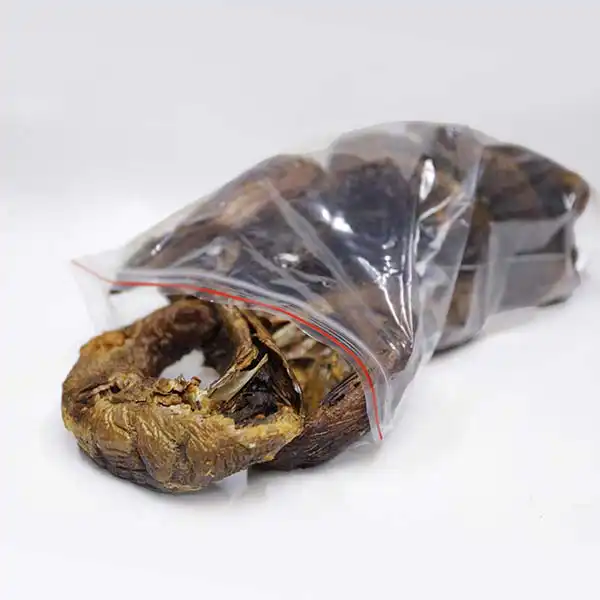
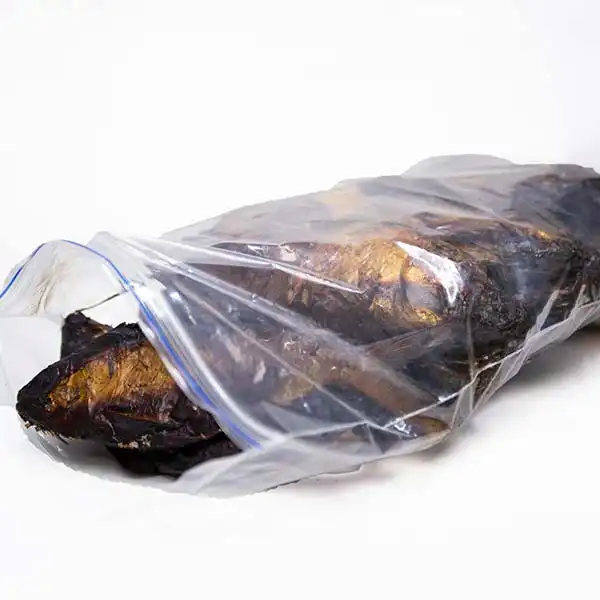

Cameroon, a country known for its rich biodiversity and varied ecosystems, is home to a wide range of snail species integral to the environment and local culinary traditions. Snails, known for their nutritional value and versatility in cooking, have been a staple in Cameroonian cuisine for centuries.
At BaobabMart, we recognize the importance of these unique species and are proud to offer natural dried snails sourced from Cameroon. In this comprehensive guide, we will explore the different snails species from Cameroon, their characteristics, and their significance in both traditional and modern contexts.
Table of contents
Giant African Land Snails (Achatinidae Family)
1. Achatina achatina (Giant African Land Snail)
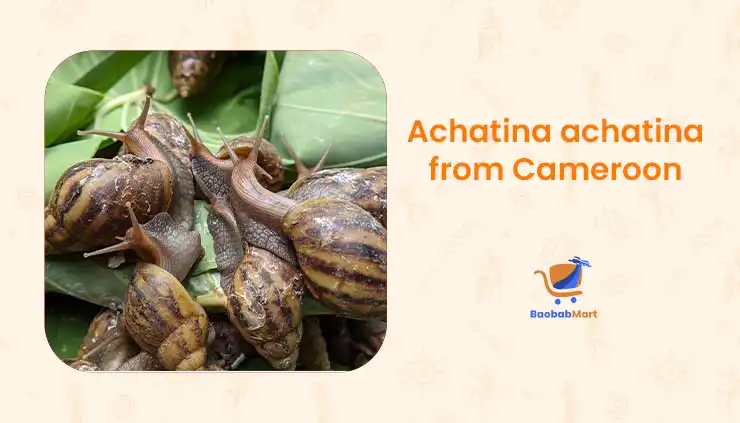
Overview
- Scientific Name: Achatina achatina
- Common Name: Giant African Land Snail
- Habitat: Primarily found in the humid forests of Cameroon and other parts of West Africa.
- Size: Known as one of the largest snail species in the world, with shells that can grow up to 30 cm in length.
Characteristics
- Shell: The shell of the Achatina achatina is distinctive, featuring a conical shape with alternating brown and cream bands.
- Lifespan: These snails can live up to 10 years in the wild, making them a long-lived species compared to other snails.
- Diet: They are herbivorous, primarily feeding on various vegetation, including leaves, fruits, and vegetables.
Significance
- Culinary Use: The Giant African Land Snail is highly prized in Cameroonian cuisine for its large size and meaty texture. It is often used in stews, soups, and grilled dishes.
- Cultural Importance: In many Cameroonian cultures, these snails are considered a delicacy and are often featured in traditional feasts and celebrations.
- Economic Value: The farming and sale of Achatina achatina contribute significantly to the local economy, providing income for farmers and vendors.
2. Achatina fulica (East African Land Snail)
Overview
- Scientific Name: Achatina fulica
- Common Name: East African Land Snail
- Habitat: It is native to East Africa but has spread to various regions, including Cameroon, where it thrives in natural and urban environments.
- Size: Smaller than Achatina achatina, with shells reaching up to 20 cm long.
Characteristics
- Shell: The shell of Achatina fulica is elongated and conical, typically brown with lighter streaks. It is less ornate than the shell of Achatina achatina.
- Lifespan: Achatina fulica has a shorter lifespan, typically living up to 6 years.
- Diet: Like its larger relative, this species is herbivorous, feeding on various plant materials.
Significance
- Culinary Use: Although smaller, Achatina fulica is also used in Cameroonian cuisine. Its tender and flavorful meat makes it popular for soups and stews.
- Environmental Impact: Achatina fulica is considered an invasive species in many parts of the world, including Cameroon, where it can significantly impact local ecosystems by outcompeting native species.
- Economic Considerations: Despite its invasive nature, Achatina fulica is farmed and sold in markets across Cameroon, contributing to local food security and income generation.
3. Archachatina marginata (Giant West African Snail)
Overview
- Scientific Name: Archachatina marginata
- Common Name: Giant West African Snail
- Habitat: Native to West Africa, including Cameroon, this species is commonly found in forested areas and plantations.
- Size: Archachatina marginata is slightly smaller than Achatina achatina, and its shells grow up to 20 cm long.
Characteristics
- Shell: Archachatina marginata’s shell is thick and robust, with a rounded shape and a color pattern that varies from dark brown to light beige.
- Lifespan: This species can live up to 8 years, making it one of the longest-lived snail species in Cameroon.
- Diet: Archachatina marginata’s diet includes many plant materials, including leaves, fruits, and decaying organic matter.
Significance
- Culinary Use: Archachatina marginata is highly valued in Cameroonian cuisine for its rich, earthy flavor and firm texture. It is often used in traditional dishes such as pepper soup and snail stew.
- Cultural Relevance: This species is deeply rooted in Cameroonian culinary traditions and is often associated with special occasions and festive meals.
- Conservation and Farming: Due to its popularity, ongoing efforts are being made to sustainably farm Archachatina marginata, ensuring that wild populations are not overexploited.
4. Archachatina camerunensis
Overview
- Scientific Name: Archachatina camerunensis
- Common Name: (No widely recognized common name)
- Habitat: Endemic to the Yaoundé region in the Centre Province of Cameroon, typically found in moist forest environments.
- Size: This species grows up to 10 cm in shell length, making it a moderately large land snail.
Characteristics
- Shell: The shell of Archachatina camerunensis features a pale olive-green to yellow apex with a distinct spiral structure. Its appearance helps distinguish it from other local snail species.
- Lifespan: Archachatina camerunensis has a lifespan of approximately 5 to 7 years under natural conditions.
- Diet: Like many other African land snails, it feeds on plant matter, including leaves, fruits, and decomposing vegetation.
Significance
- Ecological Role: As a decomposer, Archachatina camerunensis contributes to nutrient cycling in its native habitat.
- Conservation Status: Due to its limited geographic range, monitoring and potential conservation measures may be important to ensure its continued survival.
5. Archachatina degneri
Overview
- Scientific Name: Archachatina degneri
- Common Name: (No widely recognized common name)
- Habitat: Found primarily in the North and Extreme North regions of Cameroon, this species is adapted to drier conditions compared to its southern counterparts.
- Size: Archachatina degneri typically measures between 8 and 9 cm in shell length.
Characteristics
- Shell: The shell is noted for its unique purple stripe along the inner lip and a pronounced dark dorsal stripe, giving it a distinctive appearance.
- Lifespan: While specific data is limited, Archachatina degneri is believed to have a lifespan comparable to other large land snails, around 5 to 6 years.
- Diet: This species consumes a variety of local vegetation, contributing to soil enrichment through organic decomposition.
Significance
- Culinary Use: Archachatina degneri is traditionally consumed in the North and Extreme North of Cameroon, where it is considered a delicacy in various regional dishes.
- Cultural Relevance: In local communities, the species plays a role in subsistence diets and is often collected from the wild for both household use and local markets.
- Conservation Note: Due to increasing demand, sustainable harvesting practices are important to prevent depletion of wild populations
Limicolaria Species
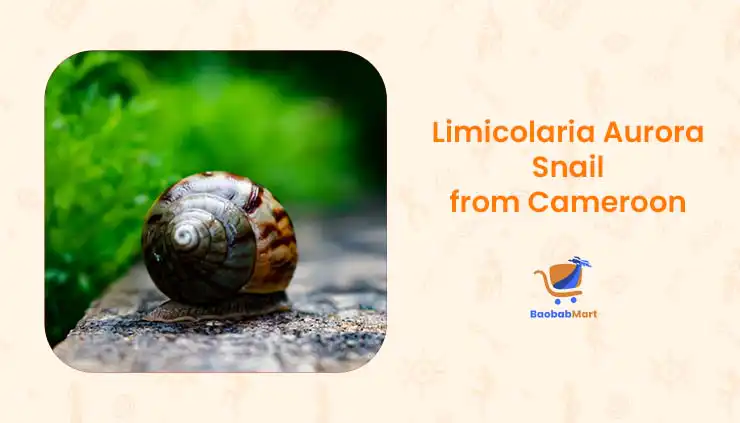
6. Limicolaria aurora (Tiger Snail)
Overview
- Scientific Name: Limicolaria aurora
- Common Name: Tiger Snail
- Habitat: Found in the moist, forested regions of Cameroon, particularly in areas with rich soil and abundant vegetation.
- Size: Smaller than the Giant African Land Snail, shells typically reaching 10 cm long.
Characteristics
- Shell: Limicolaria aurora’s shell is distinctive, with a smooth, glossy surface and a striking pattern of brown and yellow stripes resembling a tiger’s coat.
- Lifespan: This species has a relatively short lifespan, living up to 3 years in the wild.
- Diet: Limicolaria aurora feeds on various plant materials, including leaves, fruits, and decaying vegetation.
Significance
- Culinary Use: While not as commonly consumed as larger snail species, the Tiger Snail is sometimes used in local dishes. Its small size makes it more of a specialty item in Cameroonian cuisine.
- Aesthetic Value: The striking appearance of the Tiger Snail’s shell makes it popular for decorative purposes. Shells are often used in jewelry, ornaments, and other crafts.
- Environmental Role: Limicolaria aurora plays a crucial role in the ecosystem as a detritivore by helping break down organic matter and recycle nutrients into the soil.
7. Limicolaria numidica
Overview
- Scientific Name: Limicolaria numidica
- Common Name: (No widely recognized common name)
- Habitat: Found in various regions of Cameroon, particularly in moist and vegetated environments such as forest floors and farmland.
- Size: Limicolaria numidica is a medium-sized land snail, typically reaching lengths of around 5 to 7 cm.
Characteristics
- Shell: The shell is elongated and conical, with subtle color patterns that range from pale brown to light tan. It is thinner than that of larger snail species but still sturdy.
- Lifespan: This species can live up to 3–5 years in the wild, depending on environmental conditions.
- Diet: Limicolaria numidica feeds on decaying plant material, fruits, and leaves, playing a role in organic matter breakdown.
Significance
- Ecological Role: As a decomposer, Limicolaria numidica contributes to soil fertility and nutrient recycling in its natural habitat.
- Human Use: While not commonly consumed compared to larger snails, it may occasionally be collected for food or local trade in rural communities.
8. Limicolaria zebra
Overview
- Scientific Name: Limicolaria zebra
- Common Name: (No widely recognized common name)
- Habitat: Native to Cameroon, Limicolaria zebra is often found in humid areas, including gardens, forest edges, and agricultural lands.
- Size: This species is medium-sized, with adult shells typically measuring 6 to 8 cm in length.
Characteristics
- Shell: The shell of Limicolaria zebra is known for its striking striped pattern, resembling a zebra’s stripes. It features alternating bands of dark and light brown or yellowish hues.
- Lifespan: Limicolaria zebra has a lifespan of around 4–6 years, depending on habitat and climate.
- Diet: Like other land snails, it feeds on soft vegetation, decomposing plant matter, and fruits, contributing to the breakdown of organic material.
Significance
- Visual Identification: Due to its eye-catching coloration, Limicolaria zebra is easily recognizable and sometimes collected for ornamental or educational purposes.
- Cultural and Local Importance: While not a primary food source, it may be used in traditional practices or as part of informal ecological education in some regions.
9. Helix aspersa (Common Garden Snail)
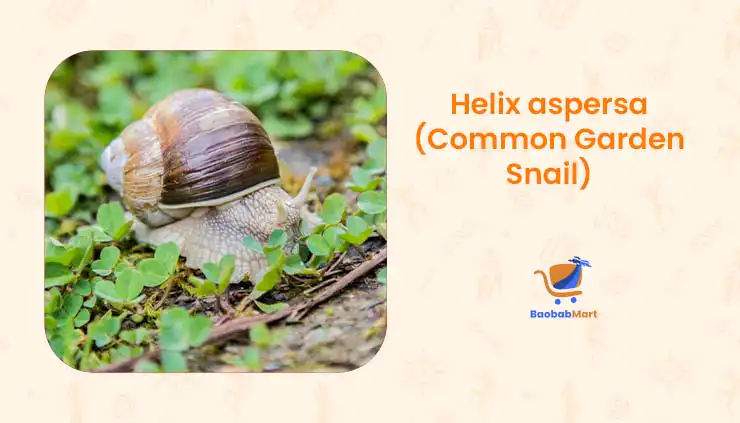
Overview
- Scientific Name: Helix aspersa
- Common Name: Common Garden Snail
- Habitat: Widely distributed across Cameroon, particularly in gardens, agricultural fields, and urban areas.
- Size: One of the smaller snail species, with shells reaching 4 cm in diameter.
Characteristics
- Shell: The shell of Helix aspersa is spiral-shaped, with a light brown or yellowish color, often marked with darker bands or spots.
- Lifespan: The Common Garden Snail has a lifespan of up to 5 years, depending on environmental conditions.
- Diet: This species is a generalist feeder, consuming various plant materials, including leaves, flowers, and fruit.
Significance
- Culinary Use: Although more commonly known in European cuisine, Helix aspersa is also consumed in Cameroon, particularly in urban areas where it is readily available. It is often prepared in garlic butter or used in stews.
- Cultural Impact: The Common Garden Snail is less culturally significant than larger species but still plays a role in local diets, particularly in regions where other snail species are less accessible.
- Agricultural Impact: While they are a food source, Helix aspersa can also be a pest in gardens and agricultural fields, where they feed on crops and ornamental plants.
Freshwater Snails
10. Lanistes ovum (Freshwater Snail)
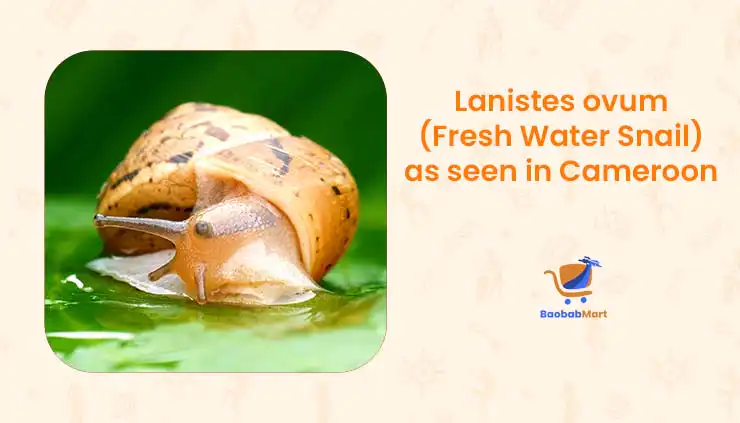
Overview
- Scientific Name: Lanistes ovum
- Common Name: Freshwater Snail
- Habitat: Found in freshwater bodies such as rivers, lakes, and ponds across Cameroon.
- Size: Smaller than terrestrial snails, shells typically reaching 5 cm in diameter.
Characteristics
- Shell: The shell of Lanistes ovum is smooth and rounded, usually brown or olive green, with a spiral shape that is less pronounced than that of terrestrial snails.
- Lifespan: Freshwater snails have a shorter lifespan, typically up to 2 years.
- Diet: These snails feed on algae, aquatic plants, and detritus, playing a key role in maintaining the health of freshwater ecosystems.
Significance
- Culinary Use: Freshwater snails are occasionally used in Cameroonian cuisine, particularly in dishes that highlight their delicate flavor. They are often cooked in sauces or stews.
- Environmental Importance: Lanistes ovum is important for the ecology of freshwater systems, where it helps control algae growth and contributes to the recycling of nutrients.
- Cultural Significance: While not as widely consumed as terrestrial snails, freshwater snails are valued in certain regions of Cameroon, particularly in communities near water bodies.
11. Pila ovata (Apple Snail)
Overview
- Scientific Name: Pila ovata
- Common Name: Apple Snail
- Habitat: Found in freshwater environments such as rivers, lakes, and marshes in Cameroon.
- Size: Apple snails are relatively large for freshwater snails, with shells growing up to 15 cm in diameter.
Characteristics
- Shell: Pila ovata’s shell is globular and smooth, greenish-brown in color. Its large size and distinctive shape make it easy to identify.
- Lifespan: These snails can live up to 3 years in their natural habitat.
- Diet: Apple snails are omnivorous, feeding on various plant and animal matter, including aquatic plants, algae, and small invertebrates.
Significance
- Culinary Use: In some regions of Cameroon, Apple Snails are considered a delicacy and are prepared in traditional dishes. Their tender and slightly sweet meat makes them a popular choice for stews and soups.
- Ecological Role: Apple snails play a significant role in freshwater ecosystems by controlling plant growth and recycling organic matter.
- Aquaculture: Besides their culinary uses, Apple Snails are farmed in some areas for their economic value, particularly in regions where freshwater snails are a dietary staple.
12. Bulinus truncatus
Overview
- Scientific Name: Bulinus truncatus
- Common Name: (No widely recognized common name)
- Habitat: Found in Sudan-Sahelian water bodies such as seasonal ponds, streams, and irrigation canals.
- Size: Small freshwater snail, generally under 1.5 cm in shell length.
Characteristics
- Shell: Coiled in a flat, planispiral shape with a light brown to reddish color.
- Lifespan: Typically 1–2 years.
- Diet: Algae, detritus, and biofilm from submerged surfaces.
Significance
- Medical Importance: Serves as the primary intermediate host of Schistosoma haematobium, the parasite that causes urinary schistosomiasis.
- Public Health Concern: Targeted in disease control efforts due to its role in transmission.
13. Bulinus forskalii
Overview
- Scientific Name: Bulinus forskalii
- Common Name: (No widely recognized common name)
- Habitat: Occurs alongside Bulinus truncatus in Sahelian aquatic habitats across Cameroon.
- Size: Slightly smaller than B. truncatus, generally around 1 cm.
Characteristics
- Shell: Smooth, flat-coiled shell with fine ridges; brown to yellowish in color.
- Lifespan: 1–2 years under natural conditions.
- Diet: Feeds on algae and decomposing plant material.
Significance
- Medical Potential: Suspected as a possible host for schistosome species; its epidemiological role requires further research.
- Environmental Relevance: Often included in schistosomiasis surveillance.
Marine and Coastal Snails
Potadoma riperti
- Habitat: Boumba River, southeastern Cameroon
- Status: Critically endangered
Cerithium species
- Notes: Found along the Atlantic coast; specific documentation ongoing
Conclusion: Snails Species from Cameroon
Cameroon hosts over 15–20 snail species across terrestrial, freshwater, and marine zones. The giant African land snails, Archachatina marginata, Achatina achatina, and Achatina fulica, are central to the economy and cuisine. Freshwater species play key roles in parasite transmission. Continued research, conservation, and safe farming practices are essential to preserve this biodiversity and develop its full economic potential. BaobabMart is committed to providing high-quality natural dried snails that celebrate this rich biodiversity and offer consumers a nutritious, sustainable, and culturally significant food source.
Whether you want to explore traditional Cameroonian cuisine, enhance your diet with a nutrient-dense protein source, or simply learn more about the diverse snail species that inhabit this region, natural dried snails from Cameroon are an excellent choice. By incorporating these snails into your diet, you can enjoy their numerous health benefits while supporting sustainable and ethical practices in food production.
Explore our selection of natural dried snails at BaobabMart and discover the rich flavors and cultural heritage these unique species offer.

4 Comments
Important, mais extrèmement incomplet et surtout pour les escargots d’eau douce.
étant de l’Est Cameroun et homme de forêt, les escargots d’eau douce sont extrèmement variés au cameroun et surtout ceux comestibles qui n’ont vraiment pas été figuré ici.
Pour vous donner un exemple, allez sur Internet et cherchez “river snail” et surtout en image, il vous aidera à savoir ce dont je fais allusion et il y en a assez encore.
Mais c’est encourageant votre initiative.
Je reviendrai par ici tout en espérant trouver une plus grande liste.
Merci!
Merci Lohrd pour ce retour précieux ! Dans l’article, nous avons nommé seulement quelques espèces d’escargots trouvées au Cameroun. Vous avez tout à fait raison, il en existe bien plus, notamment en eau douce. On prendra en compte vos remarques pour enrichir les prochaines mises à jour.
Achatina limicolaria sont coneiller en elevage
peut-ont les melanger avec d’autre souche pour l’elevage
Merci TSALA ! Oui, Achatina limicolaria est conseillée pour l’élevage. Vous pouvez les mélanger avec d’autres souches, mais faites attention à leur compatibilité et aux conditions d’élevage spécifiques à chaque espèce.