
















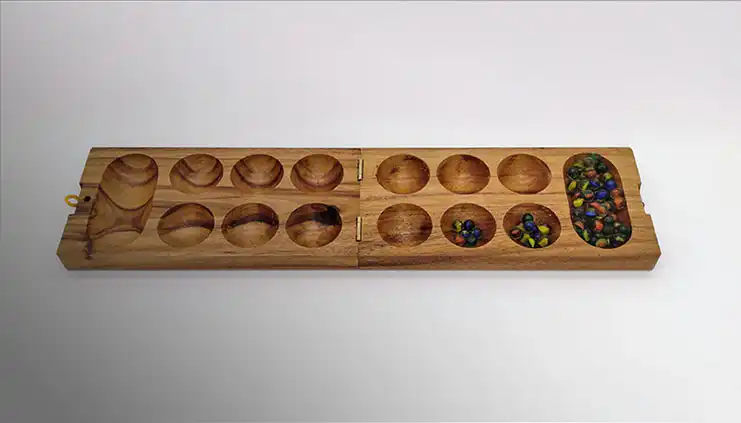
African Mancala Boards is one of the oldest and most fascinating board games in the world. It has been enjoyed for thousands of years, originating in Africa and spreading to various parts of the globe. Known for its simplicity yet strategic depth, Mancala appeals to people of all ages. This timeless game is easy to learn, making it perfect for beginners while also offering enough complexity to engage seasoned players.
In this comprehensive guide, we will explore the rules of Mancala systematically, provide strategy tips, and delve into the cultural significance of the game. Whether you are playing for fun or looking to challenge your strategic thinking, this guide will help you master the basics and start enjoying Mancala right away.
This African Mancala Boards guide contains;
What are African Mancala Boards?
A Brief History of Mancala
Mancala is not just a game; it is a part of human history, particularly in Africa, where it has been played for centuries. The game’s origins are deeply rooted in African culture, with evidence of Mancala boards found in ancient archaeological sites across the continent. The word “Mancala” comes from the Arabic term “naqala,” meaning “to move,” which perfectly captures the essence of the game. Over time, Mancala spread from Africa to the Middle East, Asia, and eventually to Europe and the Americas. Each region developed its own variations of the game, but the core mechanics remained the same, reflecting the universal appeal of this simple yet profound game.
The Basics of African Mancala Boards
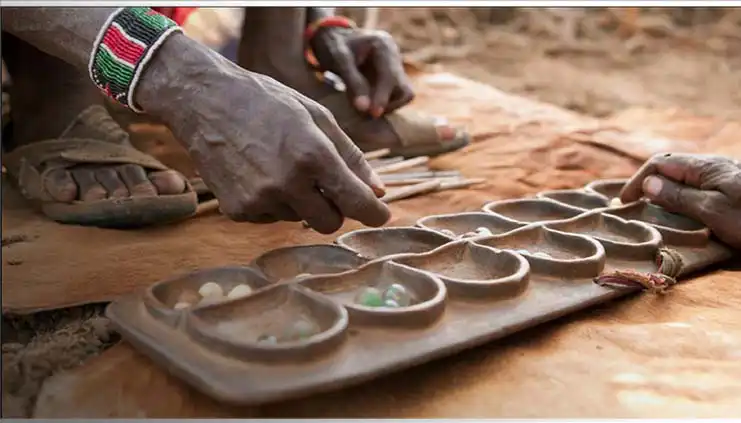
Mancala is a two-player game that revolves around strategy, counting, and planning. The primary goal of the game is to capture more stones (or seeds) than your opponent by the end of the game. The game board consists of two rows of small pits and two larger pits known as “stores.” Players move stones around the board in a counterclockwise direction, trying to accumulate as many stones as possible in their store. The game is straightforward but requires careful thought and planning to master. Explore and buy your first Mancala board at BaobabMart, perfect for beginners.
Setting Up the African Mancala Boards
Understanding the Board Layout
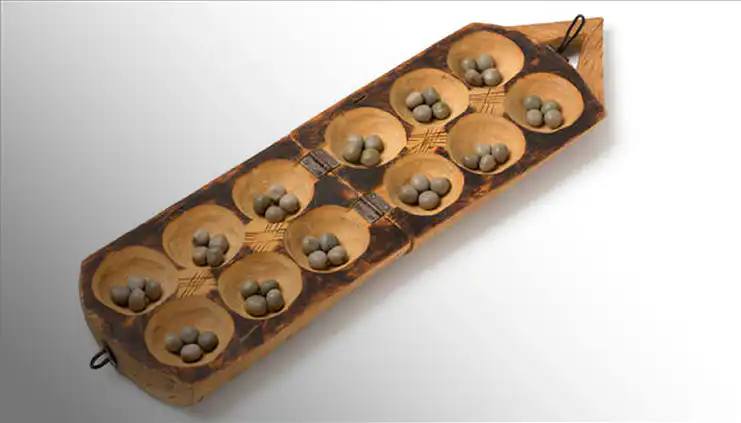
A typical Mancala board features 12 small pits arranged in two rows of six. Each player controls the row of pits closest to them, while the larger pits or “stores” are located at either end of the board. These stores are where players collect the stones they capture during the game. The design of the board can vary depending on the region and version of Mancala being played, but the standard setup remains consistent across most variations.
Distributing the Stones
At the start of the game, each of the 12 small pits is filled with an equal number of stones. In the standard version of Mancala, four stones are placed in each pit, totalling 48 stones on the board. However, the number of stones can vary depending on the version of the game or the preference of the players. Once the stones are placed, the players are ready to begin. Each player is responsible for the six pits directly in front of them and uses the store on their right side to collect captured stones.
The Rules of African Mancala Boards
Taking Your Turn
Taking a turn in Mancala is simple but requires strategic thinking. A player begins their turn by choosing one of the six pits on their side of the board and picking up all the stones in that pit. The player then distributes these stones one by one into the subsequent pits, moving counterclockwise around the board. If the player passes their store, they place a stone in it, but if they pass their opponent’s store, they skip it and continue placing stones in the next pits.
Capturing Stones
Capturing stones is a key element of Mancala’s strategy. If the last stone a player drops lands in an empty pit on their side of the board, and the pit directly across from it on the opponent’s side contains stones, the player captures both the last stone and all the stones in the opposite pit. These captured stones are then placed in the player’s store. This rule adds an exciting layer of strategy, as players must carefully choose which pit to move from to maximize their captures.
Earning Another Turn
One of the most rewarding aspects of Mancala is the opportunity to earn multiple turns in a row. If the last stone you place lands in your store, you earn another turn. This rule encourages strategic play, as players can plan their moves to keep the momentum and gain an advantage over their opponent. Earning multiple turns can be a game-changing strategy, allowing a player to quickly accumulate stones and control the board.
Ending the Game
The game of Mancala ends when one player’s six pits are all empty. At this point, the opponent moves all the remaining stones on their side of the board into their store. The player with the most stones in their store at the end of the game is declared the winner. This rule highlights the importance of both capturing stones and managing the distribution of stones in your pits, as running out of moves too early can give your opponent a significant advantage.
African Mancala Boards Strategy Tips for Beginners
Start with the Right Pit
Choosing the right pit to start your move is crucial in Mancala. As a beginner, it’s often best to start from the pits closest to your store. This increases the likelihood of dropping your last stone into your store, earning you an additional turn. Starting from these pits also helps you clear them out, which can be advantageous as the game progresses.
Plan Ahead
Mancala is a game of strategy and foresight. Before making a move, think about where your last stone will land and how it will affect your next move. Try to anticipate your opponent’s moves as well and consider how you can block or counter them. Planning allows you to set up multiple turns in a row or position yourself for a large capture.
Capture Wisely
While capturing stones is important, it’s not the only strategy to focus on. Sometimes, it’s better to forgo a capture in favour of setting up a sequence of moves that will give you multiple turns or secure more stones in your store. Balancing your strategy between capturing stones and controlling the board is key to success in Mancala.
Control the Board
Maintaining control over the majority of the stones on the board can give you a significant advantage. By controlling more stones, you can dictate the pace of the game and force your opponent into making moves that benefit you. Try to keep your pits well-stocked with stones, which can help you stay in control and limit your opponent’s options.
Watch Your Opponent
Pay close attention to your opponent’s moves and strategy. By understanding their approach, you can adjust your tactics accordingly and take advantage of any mistakes they might make. Watching your opponent also helps you anticipate their moves, allowing you to block key plays or set up traps.
Common Mistakes to Avoid
Forgetting to Plan Ahead
One of the most common mistakes beginners make is not planning their moves. Always consider where your last stone will land and what options it will give you on your next turn. Failing to plan can lead to missed opportunities or even give your opponent an advantage.
Over-Focusing on Captures
While capturing stones is an exciting part of Mancala, focusing too much on it can lead you to miss opportunities for better plays. Balance your strategy between capturing stones and building up your store. Remember, the ultimate goal is to have more stones in your store than your opponent by the end of the game.
Neglecting the Endgame
As the game progresses and the board starts to empty, it’s important to adjust your strategy. The endgame in Mancala is crucial, as it’s your last chance to capture any remaining stones and secure a win. Pay attention to how many stones are left in each pit and plan your moves accordingly to maximize your final captures.
Miscounting Stones
It’s easy to lose track of how many stones you’ve picked up or how many pits you need to drop them into. Take your time to count carefully, ensuring that you distribute your stones correctly. Miscounting can lead to mistakes that give your opponent an advantage or cost you a crucial turn.
Variations of Mancala
Oware
Oware is one of the most popular versions of Mancala, especially in West Africa and the Caribbean. The game follows similar rules to traditional Mancala but has its own unique scoring and strategic elements. In Oware, players must capture a specific number of stones to win, and the game is often played with a focus on strategy and careful planning. Oware is known for its educational benefits, as it helps players develop mathematical skills and strategic thinking.
Kalah
Kalah is a simplified version of Mancala, often played in the United States and Europe. It’s an excellent introduction for beginners because of its straightforward rules and shorter gameplay time. The primary difference in Kalah is that players always drop stones into their store, even when they pass it multiple times in a single turn. This version is ideal for those new to Mancala or for younger players who are still learning the basics.
Bao
Bao is a more complex version of Mancala, played primarily in East Africa. Known for its intricate rules and deeper strategy, Bao is considered one of the most challenging variations of the game. It requires players to think several moves ahead and often involves long-term planning and tactical play. Bao is a favourite among experienced Mancala players who enjoy a more challenging and strategic game.
Congkak
Congkak is a version of Mancala played in Southeast Asia, particularly in Malaysia and Indonesia. The game is similar to African versions but has unique twists, including the use of larger boards and different capturing rules. Once you’re familiar with the basic mechanics of Mancala, Congkak is a fun variation to try. The game is often played in a more relaxed, social setting, making it a great way to enjoy Mancala with friends and family.
Playing African Mancala Boards with Children
Teaching the Basics
Mancala is an excellent game for children because it teaches counting, strategy, and patience. Start by explaining the rules in simple terms and demonstrating a few rounds. Encourage children to think about their moves and help them understand the basic strategies. Playing Mancala with children can also be a great way to introduce them to other cultures and traditions, as the game has deep roots in African history.
Keeping the Game Fun
To keep the game fun for younger children, consider using colourful stones or seeds and playing on a board with a playful design. Focus on the joy of playing together rather than competition, especially when children are still learning the game. You can also adjust the rules to make the game easier or more challenging, depending on the child’s age and skill level.
Adjusting the Rules
For very young children, you can simplify the rules to make the game easier to understand. For example, you might allow them to move stones in any direction or give them more turns to practice before starting a competitive game. The goal is to make Mancala enjoyable and accessible, fostering a love for the game and helping children develop important cognitive and strategic skills.
Where to Find Mancala Boards
Shopping at BaobabMart
At BaobabMart, we offer a selection of beautifully crafted Mancala boards made from high-quality African woods. Each board is a unique piece of art, reflecting the rich cultural heritage of Africa. Whether you’re looking for a traditional design or something more modern, BaobabMart has the perfect Mancala board for you. Our boards are handcrafted by skilled artisans who use traditional techniques passed down through generations, ensuring that you receive a product of the highest quality.
Supporting African Artisans
When you purchase a Mancala board from BaobabMart, you’re not just buying a game; you’re supporting African artisans who have honed their craft over generations. Our boards are made using sustainable materials and traditional techniques, ensuring that you receive an authentic, high-quality product. By choosing to shop at BaobabMart, you’re also contributing to the preservation of African cultural heritage and supporting the economic development of artisan communities.
Choosing the Right Board
When choosing a Mancala board, consider the type of wood, the size, and the design. At BaobabMart, we offer a variety of options to suit every taste and budget. Whether you’re a beginner or an experienced player, our boards provide the perfect blend of functionality and aesthetic appeal. We also offer boards with intricate carvings and designs that reflect the cultural significance of Mancala, making them a beautiful addition to any home.
Caring for Your Mancala Board
Cleaning and Maintenance
To keep your Mancala board in good condition, it’s important to clean it regularly. Wipe the board with a soft, damp cloth to remove any dust or dirt. Avoid using harsh chemicals or abrasive materials, as they can damage the wood. Regular cleaning will help preserve the natural beauty of the wood and ensure that your board lasts for many years to come.
Storing Your Board
When not in use, store your Mancala board in a cool, dry place away from direct sunlight. This will help prevent the wood from warping or fading. If your board comes with a storage bag or box, use it to protect the board from scratches and other damage. Proper storage is essential for maintaining the quality and longevity of your Mancala board.
Preserving the Wood
To preserve the wood’s natural beauty, consider applying a small amount of natural oil, such as olive or coconut oil, to the board every few months. This will keep the wood moisturized and enhance its rich colour and grain. Regular oiling will also help protect the wood from drying out and cracking, ensuring that your board remains in excellent condition for years to come. Learn more about the cultural significance of African Mancala boards from this detailed guide on Traditional African Games.
Conclusion: African Mancala Boards
Mancala is a timeless game that has been enjoyed by people of all ages and cultures for centuries. Its simplicity, combined with strategic depth, makes it an engaging and rewarding game to learn and play. Whether you’re a complete beginner or looking to refine your skills, this guide provides everything you need to start playing Mancala with confidence.
At BaobabMart, we’re proud to offer a range of authentic Mancala boards that reflect Africa’s rich cultural heritage. Each board is crafted with care and precision, ensuring that you receive a product that is both beautiful and functional. By choosing to play Mancala, you’re not only participating in a fun and challenging game but also connecting with a piece of history that has brought joy to countless people around the world.
So why not get started today? Explore our collection of Mancala boards at BaobabMart and discover the joy of this ancient game. Whether you’re playing with family and friends or on your own, Mancala offers endless hours of entertainment and strategic challenge. Happy playing!
By following this guide, you’ll be well on your way to mastering Mancala and enjoying all the benefits this classic game has to offer. Remember, the key to success in Mancala is practice, strategy, and a willingness to learn. With time, you’ll develop your strategies and become a skilled Mancala player, able to challenge and defeat opponents of all levels. So gather your stones, set up your board, and dive into the world of Mancala—a game that’s as rich in history as it is in fun.