








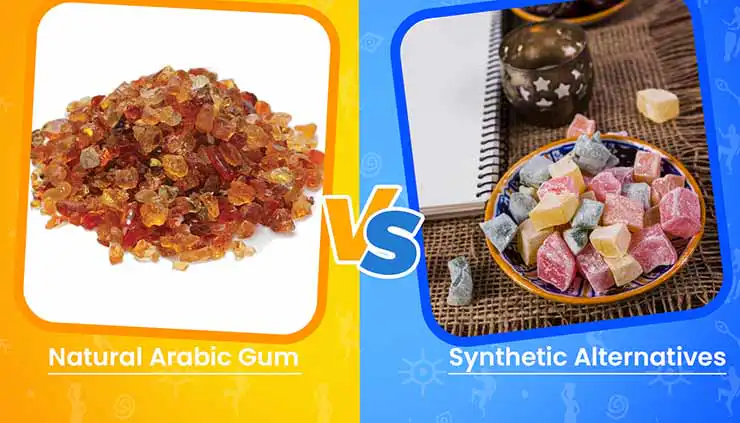
Consumers and manufacturers face a critical choice between natural and synthetic ingredients in the modern marketplace. Natural Arabic Gum, a product derived from the sap of acacia trees, has been valued for centuries due to its versatile properties as an emulsifier, stabilizer, and thickening agent.
However, the advent of synthetic alternatives has led to questions about which option is superior regarding safety, environmental impact, effectiveness, and consumer preferences. This article delves deeply into comparing Arabic gum vs synthetic alternatives, offering a comprehensive analysis that will help you make an informed decision.
In this comparison, we’ll cover;
Arabic Gum vs Synthetic Alternatives
| Arabic Gum | Synthetic Alternatives | |
|---|---|---|
| Ease of use | ⭐⭐⭐ Requires careful handling; may need specific storage conditions | ⭐⭐⭐⭐⭐ Often easier to use; usually stable and versatile |
| Popularity | ⭐⭐⭐⭐⭐ Widely recognized in health and culinary markets; favored by organic consumers | ⭐⭐⭐⭐ Commonly used in various industries; preferred for cost-effectiveness |
| Pricing | ⭐⭐⭐ Generally more expensive; may vary by supplier. But it is sold on BaobabMar at the humble price of $20/kg for black arabic gum and $35/kg for white arabic gum. | ⭐⭐⭐⭐⭐ Typically cheaper; often bulk options available |
| Source | ⭐⭐⭐⭐⭐ Naturally derived from acacia trees; preferred for organic products | ⭐ Chemically synthesized; may appeal to budget-conscious buyers |
| Health Benefits | ⭐⭐⭐⭐⭐ Contains natural nutrients; often considered healthier | ⭐ May lack natural health benefits; check for additives |
| Environmental impact | ⭐⭐⭐⭐⭐ Biodegradable and sustainable; better for eco-conscious consumers | ⭐⭐⭐ Production can be less eco-friendly; assess overall sustainability |
Understanding Natural Arabic Gum
What is Natural Arabic Gum?
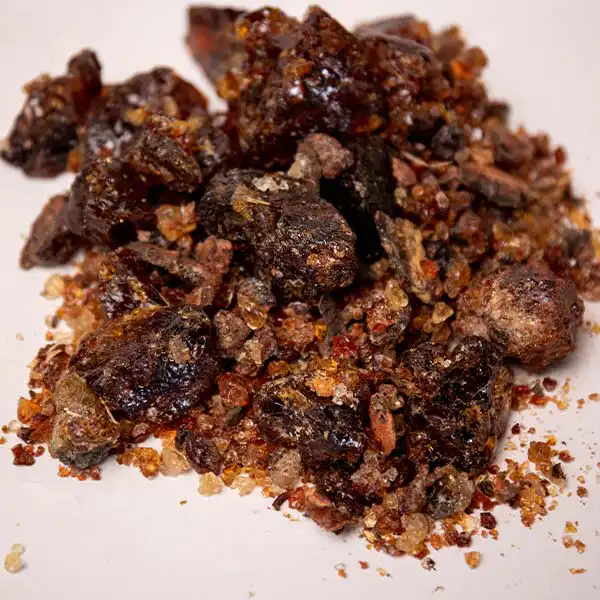
Natural Arabic Gum, also known as Acacia Gum, is a natural resin obtained from the sap of acacia trees, particularly Acacia senegal and Acacia seyal. These trees are native to the Sahel region of Africa, where they have been cultivated for centuries. The gum is harvested by making small incisions in the tree bark, allowing the sap to ooze and harden into a resin. Once collected, the gum is cleaned, processed, and used in various industries, including food, pharmaceuticals, cosmetics, and even industrial applications.
Arabic Gum’s natural emulsifier, stabilizer, and thickener properties have made it a valuable ingredient in numerous products. Its water-soluble nature allows it to blend seamlessly into formulations, improving texture, consistency, and shelf life without altering the taste or aroma.
Historical and Cultural Significance
Natural Arabic Gum has been a staple in human history for thousands of years. In Ancient Egypt, it was used in the mummification process, as well as in cosmetics and inks. The gum was also a crucial commodity along ancient trade routes, including the Silk Road, where it was exchanged for spices, textiles, and precious metals. In Africa, Arabic Gum has been used in traditional medicine, food, and beverages for centuries, highlighting its cultural importance and enduring legacy.
Today, Arabic Gum remains a key ingredient in many products, valued for its functional properties and natural and sustainable origins. Its long history of safe use and cultural significance adds to its appeal in an increasingly eco-conscious and health-aware market.
Understanding Synthetic Alternatives
What Are Synthetic Alternatives?
Synthetic alternatives to Arabic Gum are artificially produced substances designed to mimic or replace the natural functions of Arabic Gum. These synthetic gums and stabilizers are often created through chemical processes and are widely used in the same applications as Arabic Gum, including food production, cosmetics, pharmaceuticals, and industrial products.
Common synthetic alternatives include:
- Xanthan Gum: A polysaccharide produced by fermenting sugars with the bacterium Xanthomonas campestris. It is commonly used as a thickener and stabilizer in food products such as salad dressings, sauces, and gluten-free baked goods.
- Guar Gum: Derived from the seeds of the guar plant, this gum is used in food and industrial applications as a thickening agent and stabilizer. It is particularly common in dairy products and baked goods.
- Carboxymethyl Cellulose (CMC): A chemically modified cellulose derivative that is a thickener, emulsifier, and stabilizer in food, pharmaceuticals, and personal care products.
- Polyvinyl Alcohol (PVA): A synthetic polymer used in various industrial and pharmaceutical applications as a film-forming agent, stabilizer, and emulsifier.
Why Are Synthetic Alternatives Used?
Synthetic alternatives are often chosen for several reasons:
- Cost-Effectiveness: Synthetic gums are generally cheaper to produce than natural ingredients like Arabic Gum. Their lower production costs make them attractive for manufacturers looking to reduce expenses.
- Consistency and Control: Synthetic products can be manufactured to exact specifications, ensuring uniformity in texture, viscosity, and other properties. This consistency is particularly important in large-scale production, where variations in ingredient performance can affect the final product.
- Year-Round Availability: Unlike natural products, which can be affected by environmental factors and harvest seasons, synthetic alternatives are not dependent on these variables, making them more readily available year-round.
- Customization: The properties of synthetic gums can be tailored to specific applications, allowing manufacturers to achieve precise results in their formulations.
Safety and Health Considerations
Natural Arabic Gum: A Safe and Trusted Ingredient
Natural Arabic Gum has a long history of safe use in food, pharmaceuticals, and cosmetics. It is non-toxic, hypoallergenic, and generally recognized as safe (GRAS) by major health authorities, including the U.S. Food and Drug Administration (FDA). This natural ingredient is a rich source of soluble dietary fiber, which offers numerous health benefits, including improved digestive health, blood sugar regulation, and support for weight management.
Moreover, Arabic Gum’s natural origin means it is free from harmful additives, preservatives, and synthetic chemicals. This makes it an ideal choice for consumers who are conscious of what they put into their bodies and on their skin. The gum is also suitable for various dietary needs, including vegan, vegetarian, and gluten-free diets, further enhancing its appeal.
Health Concerns with Synthetic Alternatives
While synthetic alternatives are widely used, they come with potential health concerns that may deter some consumers:
- Xanthan Gum: Although generally considered safe, xanthan gum can cause digestive issues, such as bloating, gas, and diarrhea, in some individuals, particularly when consumed in large quantities. Additionally, xanthan gum is often produced using genetically modified organisms (GMOs), which may raise concerns for consumers seeking non-GMO products.
- Guar Gum: While guar gum is derived from a natural source, its processing can lead to the inclusion of additives and preservatives that may not be desirable. In some cases, excessive consumption of guar gum has been linked to digestive issues, including increased gas production and bloating.
- Carboxymethyl Cellulose (CMC): Some studies have suggested that high consumption of CMC may alter gut bacteria and contribute to digestive disturbances, such as inflammation and irritation. As a chemically modified substance, CMC may not be suitable for consumers looking for all-natural ingredients.
- Polyvinyl Alcohol (PVA): While PVA is commonly used in various applications, it is a synthetic polymer with no nutritional benefits. There are concerns about the potential long-term health effects of ingesting or applying synthetic polymers, particularly in products used frequently, such as cosmetics or pharmaceuticals.
Environmental Impact
Sustainability of Natural Arabic Gum vs. Synthetic Alternatives
One of the most compelling reasons to choose Natural Arabic Gum over synthetic alternatives is its environmental sustainability. Arabic Gum is harvested in a manner that is both sustainable and eco-friendly. The acacia trees from which the gum is derived are not harmed during harvesting, allowing them to continue producing gum year after year. This makes Arabic Gum a renewable resource with minimal environmental impact.
Additionally, the cultivation and harvesting of Arabic gum are vital to supporting local ecosystems in the Sahel region of Africa. Acacia trees help prevent desertification by stabilizing the soil and providing shade, which conserves moisture and supports biodiversity. By choosing Arabic Gum, consumers contribute to preserving these critical ecosystems and the fight against desertification.
Moreover, the production of Arabic Gum supports rural communities in Africa, providing them with a stable source of income and promoting economic development. The sustainable and fair-trade practices associated with Arabic Gum production ensure that these communities benefit directly from the global demand for this natural product.
Environmental Concerns with Synthetic Alternatives
In contrast, synthetic alternatives are often associated with a higher environmental impact due to several factors:
- Chemical Manufacturing Processes: The production of synthetic gums involves chemical reactions and industrial processes that can generate pollutants, consume large amounts of energy, and contribute to greenhouse gas emissions. These processes can have a significant environmental footprint, particularly when scaled to meet global demand.
- Dependence on Non-Renewable Resources: Many synthetic alternatives are derived from petroleum-based products or other non-renewable resources, making them less sustainable than natural options like Arabic Gum. The extraction and processing of these raw materials can also lead to environmental degradation, including habitat destruction, water pollution, and soil contamination.
- Waste and Pollution: Disposing of synthetic materials, particularly those that are not biodegradable, can lead to environmental pollution. Synthetic gums and polymers can persist in the environment for years, accumulating in landfills and potentially harming wildlife and ecosystems.
Effectiveness and Functionality
The Versatility and Effectiveness of Natural Arabic Gum vs. Synthetic Alternatives
Natural Arabic Gum is prized for its versatility and effectiveness across various applications. Its natural emulsifying properties allow it to stabilize oil-in-water emulsions, making it essential in the food industry for products like salad dressings, sauces, and beverages. In pharmaceuticals, its binding properties ensure the integrity of tablets and capsules, while in cosmetics, it enhances the texture and moisture retention of products.
Moreover, Arabic Gum’s natural composition means it is compatible with various ingredients, making it a preferred choice in formulations where natural and organic ingredients are prioritized. Its ability to improve the mouthfeel of food products without altering their flavor makes it an invaluable ingredient in the culinary world.
Comparing the Functionality of Synthetic Alternatives
While synthetic alternatives can offer similar functionalities, they often lack the natural benefits that come with Arabic Gum:
- Xanthan Gum: Xanthan gum is highly effective as a thickener and stabilizer, but it can impart a slimy texture to some products, which may be undesirable in certain applications. This texture change can affect the sensory qualities of food products, making them less appealing to consumers.
- Guar Gum: Guar gum is effective in thickening and stabilizing, but it can be sensitive to temperature changes, leading to inconsistent results in some formulations. This sensitivity can be a drawback in products that require high-temperature processing, such as certain baked goods or industrial applications.
- CMC: Carboxymethyl cellulose is versatile and effective in many applications, but as a chemically modified ingredient, it may not be suitable for consumers seeking natural or organic products. Additionally, when used in large quantities, CMC can sometimes cause unwanted changes in texture or viscosity.
While synthetic alternatives can be effective, they may not provide the same level of natural compatibility, sensory appeal, or consumer acceptance as Natural Arabic Gum. The choice of ingredient often depends on the product’s specific needs and the target market’s preferences.
Consumer Perception and Market Trends
The Growing Demand for Natural Ingredients
In recent years, there has been a significant shift in consumer preferences towards natural and organic ingredients. This trend is driven by increasing awareness of health, environmental sustainability, and the desire for products that are free from artificial additives and chemicals. As a result, Natural Arabic Gum is gaining popularity as consumers seek clean-label products that align with their values.
The clean-label movement emphasizes transparency, minimal processing, and natural sourcing, making Natural Arabic Gum a natural fit for this market trend. Consumers are increasingly looking for products that are free from synthetic ingredients, GMOs, and artificial preservatives. Arabic Gum is well-positioned to meet this demand as a natural, sustainably sourced ingredient with a long history of safe use.
Challenges for Synthetic Alternatives
While widely used, synthetic alternatives are facing increasing scrutiny from consumers and regulatory bodies. As awareness of the potential health and environmental impacts of synthetic ingredients grows, more consumers are turning away from products that contain these substances. This shift is driving innovation in developing natural alternatives and pushing manufacturers to reconsider using synthetic ingredients.
The challenge for synthetic alternatives lies in their perception as being artificial and potentially harmful. As consumers become more informed about the ingredients in their products, the demand for natural, safe, and sustainable alternatives like Arabic Gum is likely to continue rising. Brands that rely heavily on synthetic ingredients may be disadvantaged as the market shifts towards more natural and eco-friendly products.
Cost and Availability
The Cost of Natural Arabic Gum vs Synthetic Alternatives
One consideration when choosing between Natural Arabic Gum and synthetic alternatives is cost. Arabic Gum, a natural product harvested from trees, can be more expensive than synthetically produced alternatives. The cost is influenced by factors such as the raw material’s availability, the harvesting process’s complexity, and the fair trade practices that support local communities.
However, the benefits of using a natural, safe, and sustainable ingredient often outweigh the cost difference, particularly for consumers and manufacturers prioritizing quality, health, and environmental responsibility. Additionally, the premium price of Arabic Gum supports farmers’ livelihoods and contributes to the sustainability of the regions where it is harvested.
Cost Advantages of Synthetic Alternatives
Synthetic alternatives are generally less expensive to produce and more readily available, making them an attractive option for manufacturers looking to reduce costs. The ability to produce synthetic gums on a large scale without the constraints of harvest seasons or environmental factors contributes to their lower cost.
However, the lower cost of synthetic alternatives must be weighed against the potential downsides, including health concerns, environmental impact, and consumer perception. For many, the decision to use Natural Arabic Gum is not just about cost but about making a responsible choice that aligns with broader values. In some cases, the long-term benefits of using a natural, sustainable ingredient like Arabic Gum may outweigh the initial cost savings offered by synthetic alternatives.
Conclusion: Arabic Gum vs. Synthetic Alternatives
When compared to synthetic alternatives, natural Arabic Gum offers several advantages that make it a superior choice in many applications. Its natural origin, safety, versatility, positive environmental impact, and support for local communities make it an ideal ingredient for consumers and manufacturers alike.
While synthetic alternatives may offer cost savings and consistency, they often come with health, environmental sustainability, and consumer perception trade-offs. As the demand for natural, clean-label products continues to grow, Natural Arabic Gum stands out as a responsible and effective choice that meets the needs of today’s conscious consumers.
At BaobabMart, we are proud to offer high-quality, authentic Natural Arabic Gum sourced from the rich landscapes of Africa. By choosing our products, you are selecting a superior ingredient, supporting sustainable practices, and contributing to the well-being of communities across the continent. Whether for use in food, cosmetics, or pharmaceuticals, Natural Arabic Gum provides the best of both worlds—natural efficacy and a commitment to a better future.